Salary hits your account on the 1st, and by the 20th, you’re wondering where it went. Sound familiar? I’ve been there — most people have. The 50/30/20 budget rule is one of the few budgeting systems simple enough that you’ll actually stick with it past week two.
What Is the 50/30/20 Budget Rule, Exactly?
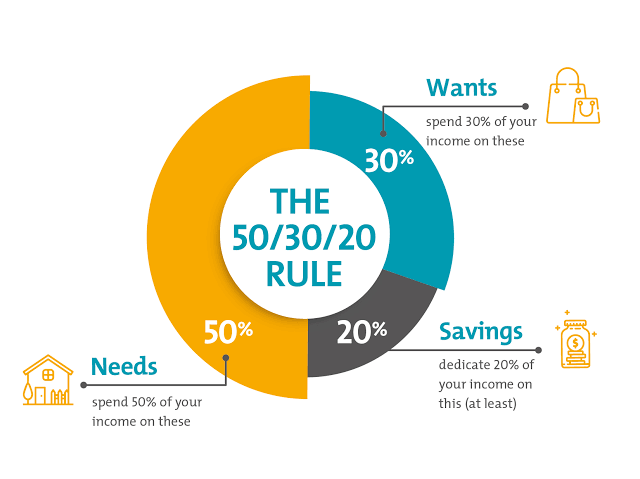
The math is almost embarrassingly simple. You split your take-home income into three buckets: 50% for needs, 30% for wants, 20% for savings and debt repayment. That’s it. No spreadsheets with forty categories, no daily expense logging.
The 50/30/20 rule divides your after-tax income into three parts — 50% for essential needs like rent and groceries, 30% for discretionary wants, and 20% for savings or debt repayment — making budgeting simple enough to actually follow long-term.
Breaking Down the “50” — Your Needs
This bucket covers things you genuinely can’t skip:
- Rent or home loan EMI
- Groceries and utilities
- Insurance premiums
- Minimum debt payments
- Transportation to work
If your needs are eating up 65-70% of your income, that’s a signal — not necessarily to panic, but to look at whether your rent or EMI is disproportionately large for your income level.
The “30” — Wants, Without Guilt
This is where people usually mess up the rule — either by feeling guilty spending on wants at all, or by letting “wants” quietly swallow the needs budget.
Wants include eating out, subscriptions, that new phone you don’t strictly need, weekend trips, hobbies. The 50/30/20 framework isn’t about deprivation. It deliberately builds in room for enjoyment, because a budget you hate following is a budget you’ll abandon by month three.
The “20” — Savings and Debt
This is the part that actually builds wealth over time. It includes:
- Emergency fund contributions
- SIP investments or mutual funds
- Extra debt repayment beyond minimums
- Retirement contributions
If you’re currently saving less than 10%, don’t jump straight to 20% overnight. Ramp up gradually — try 12%, then 15%, then 20% over a few months.
How to Apply This If Your Income Is Irregular
Freelancers and gig workers, this one’s for you. Since income fluctuates, calculate your 50/30/20 split based on your average monthly income over the last 6 months, not just the current month’s number. During high-income months, push extra into the savings bucket rather than inflating your wants spending.
[link to related guide about budgeting for irregular income here]
A Real Example
Picture someone earning ₹60,000 a month, take-home. Under the 50/30/20 structure:
- Needs (50%): ₹30,000 — rent, groceries, bills
- Wants (30%): ₹18,000 — dining, entertainment, shopping
- Savings (20%): ₹12,000 — SIPs, emergency fund, extra EMI payment
Over a year, that’s ₹1.44 lakh saved without any complicated tracking system. Compound that over five years with reasonable investment returns, and the number gets genuinely interesting.
Where This Rule Falls Short
I’ll be honest — it doesn’t work perfectly for everyone. If you live in a high cost-of-living city like Mumbai or Bengaluru, your “needs” might realistically eat 60-65% of your income, and that’s okay. Treat 50/30/20 as a starting template, not gospel. Adjust to something like 60/20/20 if your rent alone is unreasonable relative to your salary.
Suggested alt text: “Simple pie chart showing 50/30/20 budget rule split between needs, wants, and savings”
FAQ
Is the 50/30/20 rule based on gross or net income? Net income — meaning after tax deductions, since that’s the actual money hitting your bank account.
What if my needs already take up more than 50%? Adjust the ratio (like 60/20/20) temporarily while working on reducing fixed costs like rent, and try not to let the savings percentage drop below 15%.
Can I use this rule with irregular freelance income? Yes, calculate it against your average income over 6 months rather than a single month’s earnings.
Does the 20% savings include EMI payments on loans? Debt repayment beyond the minimum required amount typically counts here; minimum EMIs are usually part of the 50% needs bucket.
Is 50/30/20 better than a zero-based budget? Neither is universally better — 50/30/20 is simpler to maintain, while zero-based budgeting gives more granular control. Pick based on how much detail you’re willing to track.
Conclusion
The 50/30/20 rule works precisely because it’s simple enough to survive contact with real life. You don’t need a finance degree or an elaborate app — just three buckets and a bit of discipline. Start this month: split your next paycheck using this formula and see how it actually feels before tweaking it further.