A younger cousin recently asked me where to put money for retirement, assuming there’d be one perfect answer. There isn’t — the best retirement investment plans genuinely depend on your age, risk tolerance, and how many years you have until retirement. But there’s still a clear, practical starting framework worth knowing.
Why Starting Early Changes Everything
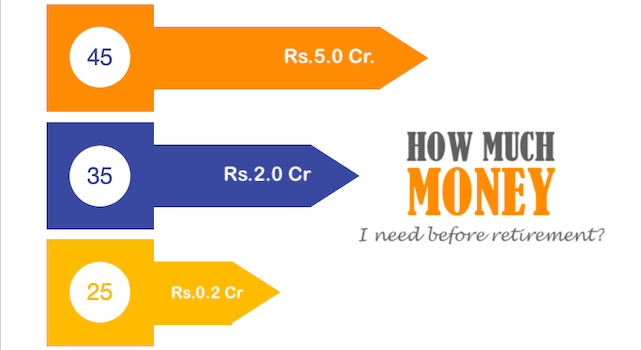
This isn’t just motivational fluff — it’s math. Someone starting retirement investing at 25 versus 35 can end up with roughly double the corpus at retirement, even with identical monthly contributions, purely due to ten extra years of compounding.
The best retirement investment plans for beginners typically combine EPF/NPS for guaranteed, tax-advantaged savings with equity mutual fund SIPs for long-term growth — balancing safety and growth based on your age, with a higher equity allocation when you’re younger and more time-cushioned against volatility.
Key Retirement Investment Options Worth Knowing
1. EPF (Employees’ Provident Fund)
If you’re salaried, this is likely already happening automatically. A portion of your salary, matched by your employer, goes into EPF, earning a government-set interest rate (currently around 8.15%) with tax benefits.
2. NPS (National Pension System)
A market-linked retirement scheme offering additional tax benefits beyond the standard 80C limit (specifically Section 80CCD(1B), an extra ₹50,000 deduction). NPS allows choosing between equity, corporate bonds, and government securities based on your risk appetite.
3. PPF (Public Provident Fund)
Covered in tax-saving discussions too, PPF works well as a safe, guaranteed component of a retirement portfolio, though its 15-year lock-in and moderate returns mean it shouldn’t be your only retirement vehicle.
4. Equity Mutual Fund SIPs
For genuine long-term growth, equity mutual funds through SIPs are hard to beat over 20-30 year horizons, historically outperforming fixed-income options despite short-term volatility.
5. Retirement-Specific Mutual Fund Schemes
Some mutual fund houses offer specifically designed retirement funds with a lock-in period, automatically adjusting the equity-debt mix as you approach retirement age.
A Practical Age-Based Allocation Approach
A commonly used rule of thumb: subtract your age from 100 (or 110 for a slightly more aggressive approach) to get your suggested equity allocation percentage, with the rest in safer debt instruments.
- Age 25: roughly 75-85% equity, 15-25% debt/fixed income
- Age 40: roughly 60-70% equity, 30-40% debt/fixed income
- Age 55: roughly 40-50% equity, 50-60% debt/fixed income
[link to related guide about how much money you need to retire comfortably here]
A Realistic Portfolio Example
Picture a 28-year-old starting retirement planning with ₹15,000 monthly to invest, beyond their EPF contribution. A reasonable split might be ₹10,000 into diversified equity mutual fund SIPs, ₹3,000 into NPS for the extra tax benefit, and ₹2,000 into PPF for a guaranteed safety component.
Common Mistakes Beginners Make
I’ve noticed two recurring issues. First, people rely entirely on EPF, assuming it alone will be enough — it rarely is, given rising costs and longer life expectancy. Second, people go too conservative too early, missing out on decades of equity growth potential simply out of caution.
Should You Prioritize NPS Over Regular Mutual Funds?
NPS offers a genuine tax advantage, but has some withdrawal restrictions (partial lump sum, rest must go into an annuity at retirement). A balanced approach — using NPS for the tax-advantaged portion while keeping equity mutual funds for more flexible, purely growth-focused investing — tends to work well for most people.
Suggested alt text: “Retirement portfolio pie chart showing allocation across EPF, NPS, PPF, and equity mutual funds”
FAQ
What is the best retirement investment for beginners in their 20s? A combination of EPF (if salaried), equity mutual fund SIPs for growth, and possibly NPS for additional tax benefits works well at this stage, given the long investment horizon.
Is NPS better than PPF for retirement planning? NPS offers higher growth potential through market-linked equity exposure and extra tax benefits, while PPF offers guaranteed but lower returns — many planners recommend using both together.
How much of my retirement portfolio should be in equity? A common rule of thumb is roughly (100 minus your age) as a starting equity percentage, though this should be adjusted based on individual risk tolerance.
Can I withdraw from NPS before retirement? Partial withdrawals are allowed under specific conditions, but full withdrawal is restricted until retirement age, with a portion mandatorily used to purchase an annuity.
Is relying only on EPF enough for retirement? For most people, no — EPF alone often isn’t sufficient given rising costs and longer life expectancy, making additional investments important.
Conclusion
There’s no single universally best retirement investment plans answer — the right combination depends on your age, risk tolerance, and how many working years remain. But the broad principle holds across almost everyone: start early, lean into equity while you’re young, and gradually shift toward safety as retirement approaches. The earlier you begin, the less painful the monthly contribution needs to be.