The first time I filed my own ITR instead of paying a CA to do it, I genuinely expected to mess something up. It took about 40 minutes, and honestly, most of that was just gathering documents. Learning how to file income tax return online yourself isn’t as intimidating as it looks from the outside.
Who Actually Needs to File an ITR?
Filing isn’t just for people who owe tax. If your gross total income exceeds the basic exemption limit, you’re generally required to file, even if TDS already covers your tax liability. Filing also helps with loan applications, visa processing, and claiming tax refunds.
You can file your income tax return online through the official Income Tax e-filing portal by gathering your Form 16, bank statements, and investment proofs, selecting the correct ITR form based on your income sources, and submitting it before the deadline — typically July 31st for individuals without audit requirements.
Documents to Keep Ready Before You Start
- Form 16 (from your employer, if salaried)
- Bank account statements for the financial year
- Investment proofs for deductions (80C, 80D, etc.)
- Home loan interest certificate, if applicable
- Capital gains statements, if you sold stocks, mutual funds, or property
- Aadhaar and PAN details
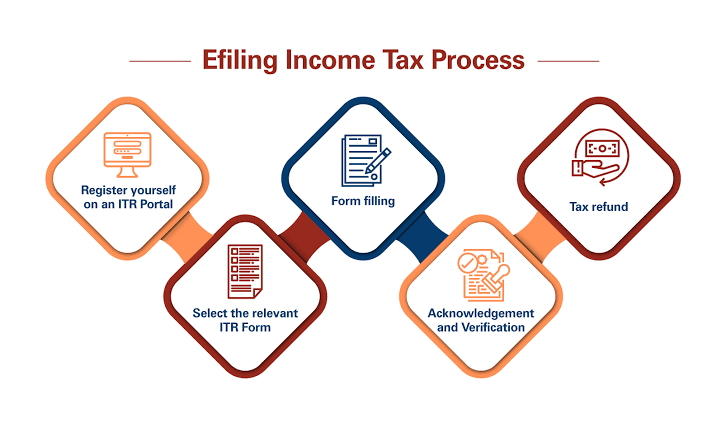
Step-by-Step Filing Process
1. Log In to the Income Tax e-Filing Portal
Visit the official portal and log in using your PAN as the user ID.
2. Select the Correct ITR Form
This trips up a lot of first-timers. ITR-1 (Sahaj) suits most salaried individuals with straightforward income. ITR-2 applies if you have capital gains or multiple house properties. ITR-3 and ITR-4 apply to business income and presumptive taxation respectively.
3. Pre-Filled Data Verification
The portal auto-populates data from your Form 16, TDS records, and AIS (Annual Information Statement). Check this carefully — don’t just click “next” blindly. I’ve seen mismatches between AIS data and actual figures more than once.
4. Enter Deductions and Exemptions
Fill in your 80C, 80D, and other applicable deductions if you’re filing under the old tax regime. The portal calculates your final tax liability automatically once all fields are complete.
5. Verify and Submit
Review the computed tax (payable or refundable), then submit. E-verification via Aadhaar OTP is the fastest method — your filing isn’t complete until verification is done.
[link to related guide about tax saving investments under 80C here]
A Realistic Timeline Scenario
Picture a salaried professional with one Form 16, some ELSS investments, and a small savings account interest income. With documents ready, filing through ITR-1 genuinely takes under an hour for most first-timers, faster with practice in subsequent years.
Old Tax Regime vs New Tax Regime
Before filing, compare both regimes — the old regime allows deductions like 80C and HRA, while the new regime offers lower base tax rates but fewer deductions. The portal often shows a comparison calculator; use it rather than guessing which saves you more.
Common Mistakes to Avoid
- Mismatched income figures between Form 16 and AIS — always cross-check
- Forgetting to report interest income from savings accounts, however small
- Missing the e-verification step, which technically leaves your return unfiled
- Filing under the wrong ITR form for your income type
What Happens If You Miss the Deadline?
A belated return can still be filed later, but typically with a late fee (₹1,000-5,000 depending on income level) and loss of certain benefits like carrying forward capital losses. Filing on time genuinely saves both money and hassle.
Suggested alt text: “Screenshot-style illustration of income tax e-filing portal steps”
FAQ
What documents do I need to file my ITR online? Form 16, bank statements, investment proofs, and capital gains statements if applicable are the main documents needed.
Which ITR form should a salaried person use? Most salaried individuals with straightforward income use ITR-1 (Sahaj), unless they have capital gains or multiple properties, which requires ITR-2.
Is e-verification mandatory after filing my ITR? Yes — your return isn’t considered complete until e-verified, typically done via Aadhaar OTP, net banking, or a physical signed form sent to the tax department.
What happens if I file my ITR after the deadline? You can still file a belated return, but it usually comes with a late fee and potential loss of certain benefits like carrying forward capital losses.
Can I file my ITR myself without a CA? Yes, for most straightforward salaried income situations, the online portal is designed to be self-explanatory enough for individual filers.
Conclusion
Learning how to file income tax return online yourself isn’t just about saving on CA fees — it genuinely gives you better visibility into your own finances. Gather your documents in advance, pick the correct ITR form, double-check the pre-filled data, and don’t skip e-verification. Once you’ve done it yourself once, next year’s filing goes noticeably faster.