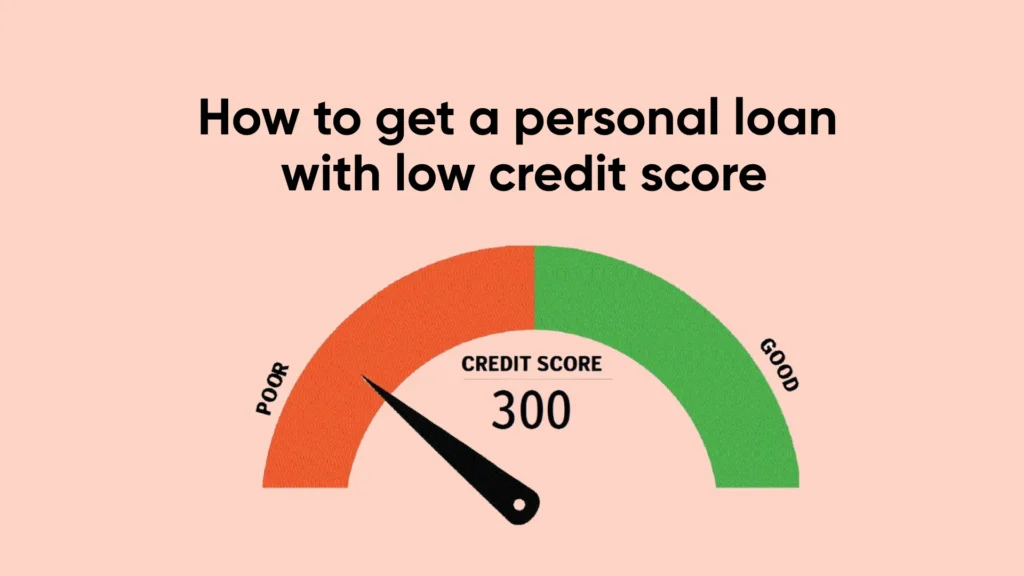
Getting rejected for a loan application stings, especially when you actually need the money. If you’re dealing with a loan with bad credit score, here’s the honest truth: it’s harder, more expensive, but not impossible — and there are real steps that improve your odds significantly.
What Actually Counts as a “Low” Credit Score?
In India, CIBIL scores below 650 are generally considered risky by most lenders, with scores under 600 making traditional bank loans quite difficult. In other countries, similar thresholds apply to FICO or equivalent scores.
Getting a loan with a low credit score is possible through NBFCs, secured loans, co-applicants, or specialized bad-credit lenders — though it typically comes with higher interest rates and stricter terms than a standard bank loan.
Options Worth Exploring
1. NBFCs and Fintech Lenders
Non-banking financial companies and newer fintech lending platforms often have more flexible eligibility criteria than traditional banks, though interest rates tend to run higher to offset the added risk.
2. Secured Loans
Offering collateral — gold, fixed deposits, property — significantly improves approval odds, since the lender’s risk is reduced regardless of your credit history.
- Gold loans: fast approval, minimal credit score scrutiny
- Loan against FD: often approved regardless of credit score, since the FD itself secures the loan
- Loan against property: larger amounts possible, longer processing time
3. Adding a Co-Applicant or Guarantor
If a family member with a strong credit score co-signs your loan application, approval odds improve significantly, and you may even qualify for better interest rates than you’d get alone.
4. Credit Unions or Community Lending
These sometimes have more personalized underwriting than large banks, occasionally considering factors beyond just the credit score number.
A Realistic Scenario
Picture someone with a CIBIL score of 580, rejected by three major banks for a personal loan. Rather than continuing to apply to traditional banks — each rejection can actually lower the score further due to hard inquiries — a smarter path might be applying for a gold loan for immediate needs, while simultaneously working on rebuilding the credit score over the next 6-12 months before attempting an unsecured personal loan again.
[link to related guide about how to improve your credit score fast here]
Steps to Improve Approval Odds Even With a Low Score
- Check your credit report for errors — disputed inaccuracies do happen and can be corrected
- Pay down existing credit card balances before applying, even partially
- Avoid applying to multiple lenders simultaneously — each hard inquiry dings your score further
- Show stable income proof, even if your credit history is weak
- Consider a smaller loan amount first to build a positive repayment track record
What to Watch Out For
Some lenders specifically target people with poor credit, offering approval with minimal checks — but often at extremely high interest rates or with hidden fees buried in the fine print. Read every term carefully. If an interest rate seems unusually high compared to market rates, that’s worth questioning before signing anything.
Building Credit for Future Loan Applications
If this loan isn’t urgent, sometimes the better move is spending 6-12 months rebuilding your score first — paying bills on time, reducing credit utilization, avoiding new credit inquiries — before applying. It’s not the fastest path, but it usually results in significantly better loan terms.
Suggested alt text: “Person reviewing credit report on laptop while researching loan options”
FAQ
Can I get a personal loan with a CIBIL score below 600? It’s difficult through traditional banks, though NBFCs, secured loans, or a co-applicant can improve your chances.
Does applying to multiple lenders hurt my credit score? Yes, each hard inquiry can lower your score slightly, so it’s better to research and apply selectively rather than broadly.
Are secured loans easier to get with bad credit? Yes, since collateral reduces the lender’s risk, secured loans (against gold, FD, or property) are generally easier to obtain regardless of credit score.
Will a co-applicant improve my loan approval odds? Significantly, especially if the co-applicant has a strong credit history and stable income.
How long does it take to improve a bad credit score? Meaningful improvement typically takes 6-12 months of consistent on-time payments and reduced credit utilization, though it varies by individual situation.
Conclusion
Securing a loan with bad credit score is genuinely tougher, but far from impossible once you know the actual options available — secured loans, NBFCs, co-applicants, or simply taking time to rebuild your score first. Don’t let one rejection push you toward a predatory lender out of desperation; take a breath, explore the alternatives above, and choose the option that doesn’t dig you into a deeper hole.