My cousin lost his job in early 2024. What saved him wasn’t a great severance package — he didn’t get one — it was eight months of expenses sitting quietly in a savings account he’d built up over two years. That’s the entire point of an emergency fund, and if you don’t have one yet, this is genuinely worth fixing sooner rather than later.
What Counts as a True Emergency Fund?
Not every unexpected expense qualifies. An emergency fund is meant for genuine crises — job loss, medical emergencies, urgent home or vehicle repairs. It is not for a flash sale on a laptop you’ve been eyeing.
An emergency fund is money set aside specifically for unplanned, urgent expenses — typically three to six months of essential living costs — kept in an easily accessible account separate from regular savings or investments.
How Much Should You Actually Save?
The standard advice is 3-6 months of expenses. But honestly, this depends on your situation:
- Salaried with stable job: 3-4 months is reasonable
- Freelancer or irregular income: aim for 6-9 months
- Sole earner supporting a family: lean toward 6+ months
- Single income, no dependents: 3-4 months can work
Do the math on your actual monthly expenses first — rent, groceries, EMIs, insurance — not your entire income.
Where to Actually Keep This Money
This part trips people up constantly. An emergency fund shouldn’t sit in the stock market or locked in a 5-year FD. You need it liquid.
- High-interest savings account
- Liquid mutual funds (redeemable in 1-2 days)
- Sweep-in fixed deposits linked to your savings account
Avoid keeping it in your regular spending account — you’ll end up dipping into it for non-emergencies without even realizing.
Building It Step by Step When You’re Starting From Zero
Here’s a realistic approach if your bank balance right now says ₹0:
- Set a mini-goal first — ₹10,000, not the full 6-month target
- Automate a fixed transfer right after each salary credit
- Redirect one source of “found money” — bonuses, tax refunds, cashback — entirely into this fund
- Cut one recurring subscription temporarily and redirect that amount
- Increase the transfer amount every 3 months as your income grows
Has this ever happened to you — you plan to save “whatever’s left” at month-end, and somehow nothing’s ever left? Automating the transfer on salary day fixes that completely.
A Realistic Timeline
Picture someone earning ₹40,000 a month with essential expenses of ₹25,000. Their target emergency fund (4 months) would be ₹1,00,000. Saving ₹5,000 a month, that’s roughly 20 months to hit the target. Slow, sure — but it’s steady, and that’s what matters.
[link to related guide about high-interest savings accounts here]
Common Mistakes People Make
I’ve noticed two recurring mistakes. First, people treat the emergency fund like a savings goal for something else — a vacation, a phone — and it slowly disappears. Second, people try to invest it in equity mutual funds chasing better returns, forgetting the entire point is accessibility, not growth.
Should You Build an Emergency Fund or Pay Off Debt First?
This is genuinely debated, and my take is: build a small starter fund (₹15,000-20,000) first, then aggressively attack high-interest debt, then return to build the full emergency fund. Having zero buffer while paying off debt means one bad month puts you right back into new debt.
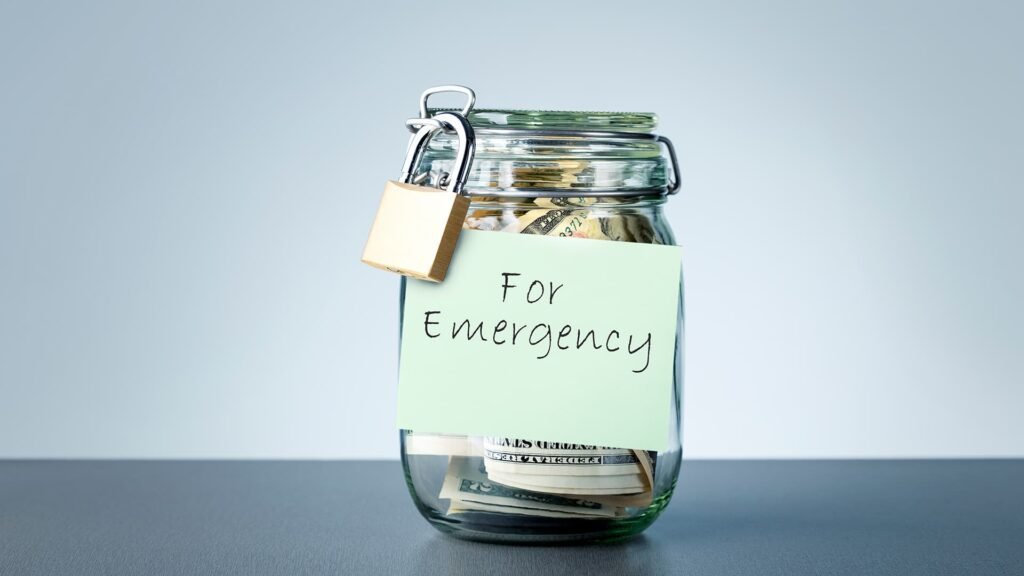
Suggested alt text: “Jar of coins labeled emergency fund next to notebook with monthly budget”
FAQ
How many months of expenses should an emergency fund cover? Generally 3-6 months, though freelancers or single-income households should aim higher, around 6-9 months.
Should I invest my emergency fund in mutual funds? Only in liquid funds meant for quick redemption — never in equity funds where value can drop right when you need the money.
Can I use my emergency fund for a big purchase if I pay it back later? It’s risky — emergencies don’t wait for you to “pay yourself back.” Keep it strictly for genuine crises.
How long does it typically take to build a full emergency fund? Anywhere from 12 to 24 months depending on your savings rate, though starting with small automated transfers speeds this up.
Is a credit card limit a substitute for an emergency fund? No — credit card debt during an emergency, especially job loss, can spiral fast due to high interest rates.
Conclusion
Building an emergency fund isn’t glamorous, and it won’t feel exciting the way investing does. But when something actually goes wrong — and eventually, something will — this is the fund that keeps a bad month from becoming a bad year. Start small this week. Even ₹2,000 automated into a separate account is a real beginning.