A colleague once spent three weekends “researching” a stock before buying it — only to sell in a panic six weeks later when it dropped 12%. Meanwhile, another friend just kept dumping money into a Nifty index fund every month without thinking twice, and five years later, he’s ahead. That pretty much sums up the real-world index funds vs stocks debate.
The Core Difference, Explained Simply
Index funds are baskets that automatically hold all the companies in a market index, like the Nifty 50 or Sensex. Individual stocks mean picking specific companies yourself and betting on their individual performance.
When comparing index funds vs stocks, index funds offer instant diversification and lower research demands, while individual stocks offer higher potential returns paired with significantly higher risk and the need for ongoing research.
Why Beginners Often Do Better With Index Funds
I’ll say this plainly: most beginners who pick individual stocks underperform the market. Not because they’re careless people, but because stock-picking genuinely requires time, discipline, and emotional control most new investors haven’t built yet.
- Index funds require zero stock-picking skill
- They automatically diversify across 30-50+ companies
- Lower expense ratios (often 0.1%-0.3% vs 1-2% for actively managed funds)
- Historically, most actively managed funds fail to beat the index over 10+ years
When Individual Stocks Actually Make Sense
That said, stocks aren’t pointless for beginners — they’re just riskier. If you enjoy researching companies, reading balance sheets, and can emotionally handle a 30% drop without panic-selling, stocks can generate higher returns.
- You have surplus money beyond your core investment portfolio
- You’re genuinely interested in company research, not just chasing tips
- You can stomach short-term volatility without losing sleep
A Realistic Comparison Over Time
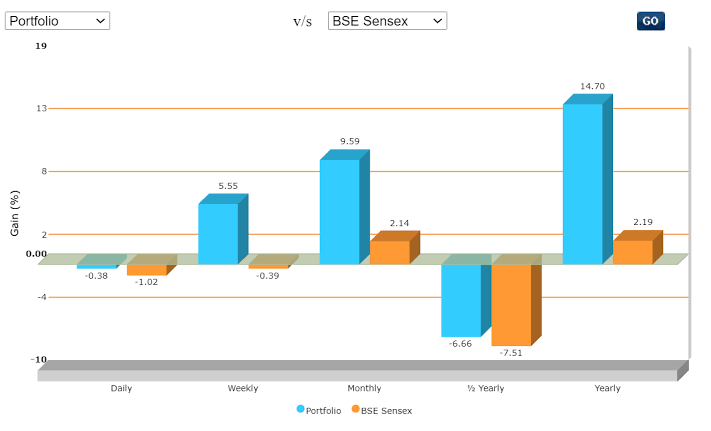
Picture two people starting with ₹5,000 a month in 2020. One invests entirely in a Nifty 50 index fund. The other picks 8-10 individual stocks based on friends’ recommendations and social media buzz. By 2026, the index fund investor has a predictable, market-matching return. The stock picker’s outcome varies wildly — some individual stocks might have doubled, others might have dropped 40%, and unless they were disciplined about diversifying, the overall portfolio outcome is far less certain.
[link to related guide about how to start a SIP here]
Risk Comparison at a Glance
| Factor | Index Funds | Individual Stocks |
| Diversification | Built-in | You build it yourself |
| Research needed | Minimal | Significant |
| Volatility | Moderate | Can be high |
| Expense ratio | Low (0.1-0.3%) | Brokerage fees only |
| Beginner-friendly | Very | Less so |
Can You Do Both?
Absolutely, and honestly, this is what most experienced investors eventually settle on. A common approach: keep 70-80% of your portfolio in index funds for stability, and 20-30% in individual stocks you’ve genuinely researched and believe in.
This way you get market-matching baseline growth with room to chase higher returns on the side, without betting your entire future on a handful of picks.
Mistakes Beginners Make in This Debate
The biggest one? Jumping straight into individual stocks based on tips from a WhatsApp group or a YouTube video, with zero understanding of the underlying business. I’ve watched this play out badly more times than I can count.
Suggested alt text: “Comparison chart showing index fund diversification versus individual stock investment”
FAQ
Are index funds safer than individual stocks? Generally yes, due to built-in diversification, though index funds still carry market risk and can fall during downturns.
Can beginners make money picking individual stocks? Yes, but it requires research discipline and emotional control that most beginners haven’t developed yet — starting with index funds first is generally safer.
What’s a good starting index fund for a beginner in India? Nifty 50 or Sensex index funds are common starting points due to their broad diversification across large, established companies.
How much money do I need to start investing in index funds? Many platforms allow SIPs starting from as little as ₹500 a month.
Should I switch entirely from stocks to index funds? Not necessarily — many investors use a mix, keeping a core index fund allocation while holding a smaller portion in individual stocks they’ve researched.
Conclusion
The index funds vs stocks question doesn’t have one universal right answer, but for most beginners, starting with index funds and adding individual stocks later — once you’ve built some experience — is the more sensible path. Don’t let the excitement of stock-picking distract you from building a solid foundation first.