A colleague needed ₹1.5 lakh quickly for a medical expense last year and almost swiped it entirely on his credit card’s EMI conversion feature — before someone pointed out a personal loan would’ve cost him nearly ₹15,000 less in interest over the repayment period. The personal loan vs credit card loan decision genuinely comes down to numbers, and most people don’t check them carefully enough.
What’s the Actual Difference?
A personal loan is a lump sum borrowed from a bank or NBFC, repaid over a fixed term with a set EMI. A credit card loan (sometimes called a credit card EMI or cash advance) uses your existing card’s credit limit, either converting a purchase into EMIs or withdrawing cash against the limit.
Personal loans generally carry lower interest rates (roughly 10-16% annually) compared to credit card loans or cash advances (often 24-42% annually), making personal loans the cheaper option for most borrowing needs above a certain amount.
Comparing the Actual Costs
| Factor | Personal Loan | Credit Card Loan |
| Interest Rate | 10-16% p.a. | 24-42% p.a. |
| Processing Fee | 1-3% of loan amount | Often none, but hidden charges apply |
| Repayment Term | 1-5 years, flexible | Usually shorter, less flexible |
| Approval Speed | 1-3 days typically | Instant, if limit available |
When a Credit Card Loan Actually Makes Sense
It’s not always the worse option. Credit card EMI conversions can make sense for:
- Very small amounts you can repay within 2-3 months
- True emergencies where speed matters more than a slightly higher cost
- Situations where you already have zero processing fee EMI offers active on your card
When a Personal Loan Is Clearly Better
For larger amounts or longer repayment periods, personal loans almost always come out cheaper. If you’re borrowing more than ₹50,000-₹1,00,000, or need more than 6 months to repay, the interest rate gap between the two options becomes significant enough to matter.
- Larger borrowing amounts (₹1 lakh+)
- Longer repayment horizons (12+ months)
- When you want predictable, fixed EMIs
- When your credit card limit isn’t sufficient anyway
A Real Cost Comparison
Picture borrowing ₹2,00,000 for 24 months. At a 13% personal loan interest rate, total interest paid comes to roughly ₹28,000. At a 30% credit card loan rate for the same amount and term, total interest jumps to nearly ₹68,000. That’s a ₹40,000 difference — not a small gap by any measure.
[link to related guide about how to get a loan with a low credit score here]
Impact on Your Credit Score
Both affect your credit score, but differently. A personal loan, once approved, shows as an installment loan — generally viewed favorably if repaid on time. High credit card utilization from a large EMI conversion or cash advance can actually hurt your credit utilization ratio, which is a significant factor in your credit score calculation.
Hidden Costs to Watch For
Credit card cash advances often come with an additional upfront fee (2.5-3% of the amount withdrawn) on top of the high interest rate — and interest usually starts accruing immediately, with no interest-free grace period like regular purchases get.
Mistakes People Make With This Decision
I’ve noticed people default to credit card EMI simply because it’s faster and requires no new application. That convenience genuinely costs money — sometimes a lot of it — if you’re not comparing the actual interest rates side by side.
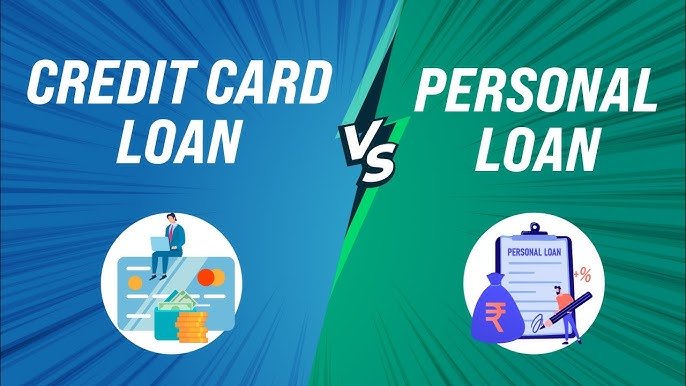
Suggested alt text: “Side-by-side comparison of personal loan and credit card loan interest rates”
FAQ
Is a personal loan always cheaper than a credit card loan? For larger amounts and longer terms, generally yes, due to significantly lower interest rates — though small, short-term credit card EMI offers can occasionally be competitive.
Does taking a credit card loan hurt my credit score more than a personal loan? It can, particularly if it pushes your credit utilization ratio high, which is a meaningful factor in credit score calculations.
How fast can I get a personal loan approved? Many banks and NBFCs offer approval within 24-72 hours, especially for pre-approved customers with existing banking relationships.
Can I use a personal loan to pay off credit card debt? Yes, this is a common strategy called debt consolidation, since personal loan interest rates are typically much lower than credit card rates.
What credit score do I need for a personal loan? Most lenders prefer a score of 700+ for favorable rates, though loans are sometimes available at higher interest rates for lower scores.
Conclusion
Between personal loan vs credit card loan, the math usually favors personal loans for anything beyond a small, short-term amount. Before you tap that “convert to EMI” button on your card, take five minutes to actually compare the interest rate against a personal loan offer. That small bit of homework can genuinely save you thousands.